Author Archives: Orit Esther Riter

Loading
loading..

Loaning Hope

January 8, 2018
Orit Esther Riter
No Comments

BS’D

There is one particular request that Dovid HaMelech seeks and emphasizes in perek 27. Dovid makes numerous pleas, however this one encompasses the rest. Verse four: “Echad sha’alti me’et Hashem, Otah Avakesh… (One thing I ask of Hashem, this I seek…)” The Hebrew word used for ‘ask’ is sha’alti as opposed to bee’kashti (to seek). Why?

The word she’elah refers to the idea of a loan while the word bakashah denotes a request that does not need to be returned. Dovid HaMelech pleads with Hashem that He consider giving him a ‘loan’ of compassion and allow him the quietude of sitting in Hashem’s house and embracing His love. Amazingly, Dovid HaMelech, the King of Israel, feels inadequate to make a request but rather feels as though he is only entitled to a loan of Hashem’s compassion. What are we to say?

We must never despair or lose hope that we have gone so far adrift that we cannot return to Hashem Who loves us dearly. We pray for His protection and to be consoled by His Fatherly love, even if we need to take it as a ‘loan.’ Even if we are undeserving we trust that Hashem will ‘lend’ us this chance to experience His endless love no matter where we are.

We seek, we beg and we ‘borrow’ but never lose hope in the loving care of our Aba who ‘wishes’ to shower us with His love and protection more than we can imagine. Hope and trust is the message of this perek, as indeed the final closing words are, “Place your hope in Hashem. Be strong! He will strengthen your heart and can place your hope in Hashem.”

A Smack of Love

January 3, 2018
Orit Esther Riter
No Comments

BS’D

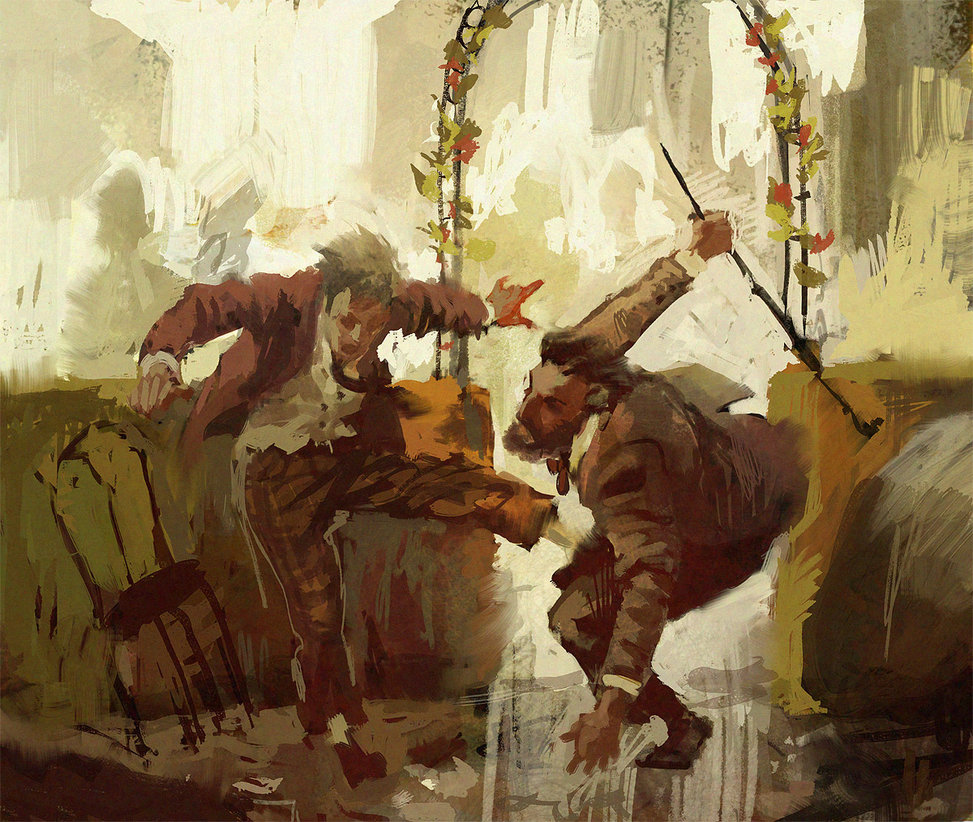
There is a story told about the Gaon HaRav Chaim m’Sanz ztk’l. After his son passed away he was asked how he bears the tremendous suffering and pain of loosing a child. His answer was given via a parable: Let’s imagine for a moment you are sitting comfortably on a chair when suddenly you receive a hard slap on your back. Immediately you turn around to see who did it.

If you turn around and notice a stranger behind you that you have never seen before chances are you will implode or explode with anger towards him. However, if you recognize that person to be your father and realize that it was a friendly smack, you are more likely to be acceptable and receive him with a warm glow.

The Gaon continued to say that there is a ‘ meaningless smack’ and there is a ‘smack of love’. I received a harsh and painful smack when I lost my son. However when I turned around to see who did it I saw that it was from HaKadosh Baruch Hu who I love more than anyone or anything in the world. His love for me is greater than His love for anyone in the world. Therefore I am able to cope with it the way that I do.

Hashem loves us and is guiding us to a world of perfection… forever. B’H may we merit to see only revealed good, Amen.

Crying With Hashem

January 2, 2018
Orit Esther Riter
No Comments

BS’D

A Jew who is tormented by his afflictions thinks that he suffers alone as if all his personal afflictions and those of all of B’nei Yisrael do not affect Hashem,c”v. Yeshaya the prophet said, ‘In all their troubles He was troubled,’ and Chazal tell us, ‘When a person suffers, what does the Shechina say? “My head is too heavy for Me, My arm is too heavy for Me.” When a Yid is afflicted Hashem suffers, as it were, much more than the person does. The reason being that since Hashem is not subject to any limitation, therefore His suffering from Israel’s troubles is also boundless.

Precisely because Hashem is infinite, ‘His suffering’ is infinite and beyond human conception. The rivers of tears shed by Ahm Yisrael who are in pain are like a mere trickle compared to the ocean that is Hashem’s suffering. He stands with us at every street crossing and knows our fears. There is a reason, and the questions do have answers. Hashem, so to speak, is in His inner chambers weeping, so that one who pushes in and comes close to Him by means of living in a Torah way weeps together with Him and lives Torah with Him. Only this makes the difference, for the weeping and pain a person undergoes by himself, alone, may have the effect of breaking him and bringing him down so that he becomes incapable of doing anything.

But the weeping a person does together with Hashem strengthens him. He weeps, and is strengthened; he is broken, but finds courage to study and teach. It is hard to raise one’s self up, time and again, from the tribulations, but when one is determined, stretching his mind to connect with Hashem, then he enters the inner chambers where the blessed Holy One is to be found; he weeps and wails together with Him, as it were, and finds the strength to study and serve Him.

The Gift of Every Jew

January 1, 2018
Orit Esther Riter
No Comments

BS’D

Emuna is an innate gift given to every Jew. The emuna seeds were ‘planted’ during the entire experience of Yetziat Mitzrayim; with every plague another seedling was lovingly planted in our hearts by Hashem, a testimony of His love for us. We read in the Pesach Hagaddah, “Ani v’lo saraf (It was I {Hashem} and not an angel)” who redeemed you from Mitzrayim; so that we remember that we were and still are personally taken care of by Hashem Himself.

Genuine emuna is a settled intellectual conviction that what Hashem has promised will indeed come to pass. Borei Olam’s promises of our future are as certain and reliable as though they were being told to us personally right now. We should be keenly aware of Hashem’s love for us at every given moment. The word bitachon (trust) is derived from the word betach (secure). In other words it describes a state of safety, security and certainty, not just intellectually but emotionally.

“Ki karov eilecha hadavar me’od b’ficha u’vilvavecha la’asotoh (For the matter is very near to you, in your mouth and in your heart, to do it)” (Devraim 30:11). Although this particularly refers to our ability to do teshuva, it is a well known teaching that after doing a spiritual accounting we are gifted with incredible closeness to Borei Olam. The ability to bond to Hashem is very near to us, we need not travel far to access it, as it is warmly planted in our hearts.

A Story About Friendship

December 27, 2017
Orit Esther Riter
No Comments

BS’D

“Love your fellow as yourself.”


Rabbi Israel of Rizhin illustrated this with the following story:

” A Faithful Friend”

Once there were two friends whose souls were intertwined with a great love. They lived very far from one other. One of them was falsely accused of a crime, convicted and sentenced to death. A proclamation was made that everyone in the land must attend this criminal’s execution.

When his friend came to the execution, he recognized him. He cried out loudly, “Leave that man alone! It is I who committed the crime.”

The execution was stopped. The matter was brought before the king, who he summoned both men and asked them the truth of the matter. Only one of them could have committed the crime, so why is the other one willing to die in vain?

The friend of the condemned man answered the king, “I know that my friend did not commit any crime. I know his character. He couldn’t have done it. And so this is nothing but a miscarriage of justice. My life depends on my friend’s life. It is better that I die and not see his death. In fact, if I have received such a punishment as having to see my friend’s death, I must myself be deserving of death.”

And the other man replied in a similar fashion.

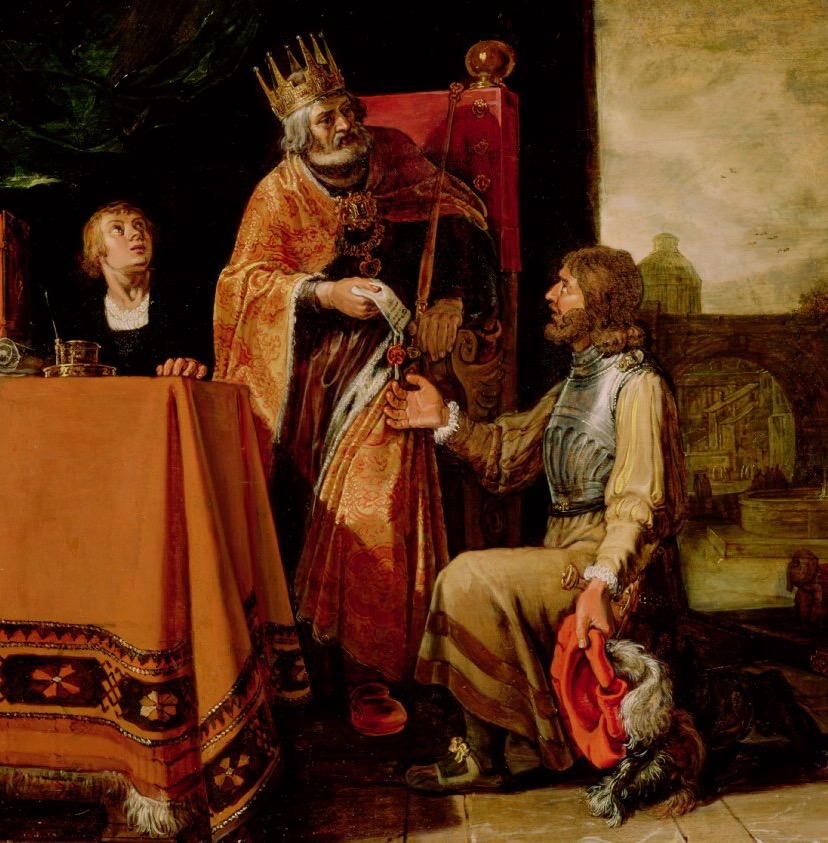
When the king saw the great love between these two men, he let them both free. And he requested of them, “You are such great friends that I would like you to take me into your circle of friendship, with that same amount of love. And I will be the same kind of friend to you.”

When we reach the level of “you shall love your fellow as yourself,” Hashem desires to rest His presence amongst us, so that we will also love Him, and that He will be our faithful Friend.
Imrei Tzaddikim, by Meir Barenstein, p. 38

Unwanted Thoughts

December 26, 2017
Orit Esther Riter
No Comments

BS’D

Many of us share a spark of ratzon (desire) to make a change in one aspect or another in our lives. A fundamental stepping stone to create change in any area of our lives is to first work on our thoughts. The ideas and thoughts that most often occupy our mind space are the ones that we tend to believe and trust in the most. In other words, because they are so familiar to us we don’t tend to question them and place our trust in them. Therefore, it is essential to become keenly aware of what thoughts we entertain and give notice to.

Let’s say for example that I am accustomed to negative degrading thoughts about myself and give them space to flow freely in my mind, I am now driven to act upon that negativity. Discouraging thoughts are the greatest impediment to creating change in our lives. Yet, it doesn’t have to be this way. We cannot control the thoughts that ‘pop’ into our minds; nonetheless we can control our response and the ‘space’ we give them to stay there.

Like unwanted guests who are given a cold welcome and will think twice to return, we can do the same with negative destructive thinking patterns. The choice remains ours whether we choose to give our time and energy to these thoughts or not. It is a battle however inviting Hashem to help us defeat this negative pattern of thinking is the only way to succeed.
Speaking to Hashem, “Hashem, I can’t do this without You. I want to cherish and empower myself to make real change. Guide me… Show me what to do” WILL make a difference and bring bracha into your desire to set a renewed tone to the way you use your mind.

Creating Emuna Through Tefillah

December 25, 2017
Orit Esther Riter
No Comments

BS’D

Through tefillah, we are able to bond with Hashem in an irrepressible manner. Tefillah centers us on how dependent we are on Hashem for everything in our lives. From the seemingly miniscule to the apparently significant events, all is personally taken care of by HaKadosh Baruch Hu.

However, the messages we receive from the Western world media is precisely the opposite. ‘Your strength and intellect has brought you success’ is what is being told to us. Just as soon as we reinforce our minds and hearts with emuna, we walk into the ‘big world’ and our vantage point is smashed to smithereens.

At that point, we are plunged into thinking once again that we are calling the shots, and the more we do, the more we will accomplish. The matter of hishtadlut vs. emuna is beyond the scope of this emuna lesson, but it has been discussed previously. For now, the main point is to understand that in order for us to reach a point where we attain a level of unwavering emuna free from worry and anxiety is no simple task. Working on emuna is a lifelong mission for each and every one of us, as we are told by Rabbi Shlomo Wolbe ztk’l. However, we must not forget that Hashem gave us the power to strengthen or even create our emuna through tefillah.

Tefillah is that time of day that reminds us how much we need Hashem every step of the way. Walking away from tefillah should be an invigorating experience filled with reconnection and realignment to the truth; that Borei Olam is intimately involved and governing the world and therefore we have nothing to worry about.

Finding Hashem

December 19, 2017
Orit Esther Riter
No Comments

BS’D

From the well-known incident which occurred between Rabbi Chanina ben Dosa ztk’l and his daughter, we can develop many teachings.

It was erev Shabbat just before candle lighting, and the daughter of R’ Chanina was saddened since she had poured vinegar instead of oil into the candle holders. When she realized that oil was not available, her father replied, “My daughter, The One who gave permission for the oil to light can tell the vinegar to light” and so it was. R’ Chanina did not pray to Hashem that it shall be so. He simply made a statement of emuna peshuta (simple words of emuna), and as a result of his emuna, the vinegar served as a lighting source for the Shabbat candles.

For R’ Chanina, there was no miracle in that a candle can be lit with vinegar since using oil was just as miraculous in his eyes. This message is strengthened by the words quoted in Masechet Makot, “In the way that man wishes to go, they guide him.” The forces in life are meant to test us. Hashem allows for these conflicting powers to persist in order to provide us with free will. Nonetheless, we must remember that they are all tests of faith to challenge us to see Hashem, not nature or cause-and-effect.

A question which may arise from the case of R’ Chanina could be why didn’t Hashem bring about a smaller miracle by providing him with oil to light the candles as opposed to a grander miracle of enabling the vinegar to be lite? The answer – for R’ Chanina the usage of oil or any other substance is a revealed miracle. The term nature simply did not exist in his mind. Therefore, Hashem ‘responded’ to him measure for measure in a miraculous way.

From here, we learn that if we work towards experiencing Hashem in every aspect of our lives, we will surely merit finding Him, whether in ‘natural’ circumstances or ‘supernatural’ events.

Create Positive Energy… Create an Angel!

December 18, 2017
Orit Esther Riter
No Comments

BS’D

“All of Your commandments are emuna” (Tehillim 119:86). The Zohar HaKadosh teaches that the 613 mitzvot are fundamentally 613 pieces of advice on how to strengthen the bond with HaKadosh Baruch Hu. Each time we do a mitzvah in effect we shrink the gap between Klal Yisrael and Hashem. In order to supercharge our mitzvot we must incorporate our hearts as well as our minds into every mitzvah.

Body and soul are enjoined in this world for the purpose of revealing Hashem’s presence. The body is inclined to physicality; it sees the outer casing. The soul penetrates the surface and digs to uncover purpose. The body needs the soul as much as the soul needs the body to fulfill its mission on earth. The mind needs the heart as much as the heart needs the mind to capture the power rooted in each mitzvah. We experience the powerful benefits of each mitzvah when we pair what we know to what we feel.

During this time many of us want to help our soldiers, the Jewish communities situated in the South of Israel or anyone in harm’s way. What can we do from the four corners of our home that will supercharge the merits of Ahm Yisrael? Pump emuna into our mitzvot. Here’s one way how:

Next time we begin doing a mitzvah let’s envision that we are creating a perfect angel. As we complete the mitzvah let’s picture shipping this angel immediately to a soldier in Gaza to shield and protect him.

Send the angel to move a rocket to hit an open field or into the sea. Maybe send that angel to a friend or family member who is experiencing hardship; pack him up with extra love and hugs. What about sending him to a person that we may be on bad terms with?

Imagine the power Hashem has given us when He appointed us to be co-partners with Him to bring G-dliness into this world. Let’s take advantage of it.

Layout mode
Predefined Skins
Custom Colors
Choose your skin color
Patterns Background
Images Background